







The Benefits Of Seaweed For The Gastrointestinal Health Of Dogs

Seaweed supplements add fibre to your dog's diet, and fibre can help firm loose stools and ease constipation in some dogs. Seaweed is not a treatment for digestive illness. If your dog has blood in the stool, diarrhoea that will not clear up, or vomiting, see your vet first.
When to see a vet first
Contact your vet before giving seaweed, or straight away if your dog is already unwell, if there is:
- blood in the stool, or black, tarry stools
- vomiting, or a swollen or painful tummy
- diarrhoea that lasts more than a day or two, or keeps coming back
- low energy, or refusing food or water
Act sooner in puppies, small dogs, elderly dogs and dogs with other health problems.

Does seaweed help diarrhoea and constipation?
Seaweed contains dietary fibre, both soluble and insoluble. Dietary fibre and fermentable fibres (prebiotics) are a standard part of managing constipation in dogs, and firmer stools help dogs with loose stools. We are not aware of a trial of seaweed supplements for diarrhoea or constipation in dogs, so the case rests on its fibre content. Some seaweed fibres act as prebiotics in laboratory tests, but that has not been tested in dogs. Results vary from dog to dog, and some products need several weeks to show an effect.
Seaweed products for gut health
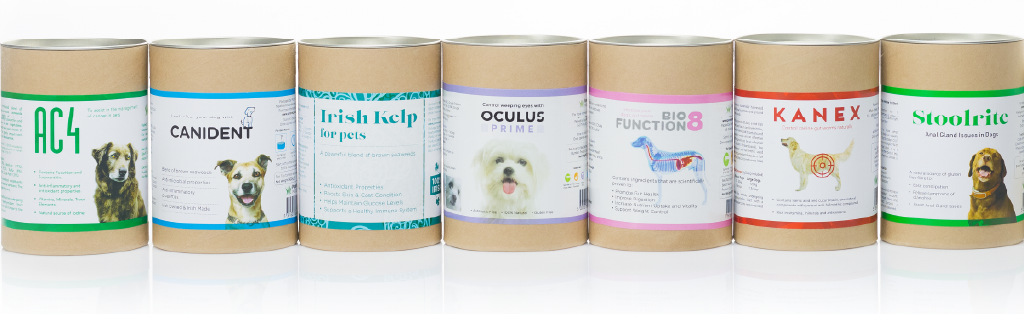
BioFunction8 is our gut blend. It combines a mix of seaweeds with organic chia seeds, chamomile and marshmallow, and comes with a 2 gram scoop. The feeding guide is on the pack and on the product page.
Stoolrite is a single-ingredient green seaweed powder that is high in fibre. It goes on one meal a day: 1 level teaspoon for a small dog (under 10 kg), 2 for a medium dog (10 to 20 kg) and 3 for a large dog (over 20 kg). Allow up to five weeks to see results, and use half the dose for maintenance.
How to introduce seaweed
- Use a supplement made for dogs from a reputable manufacturer, and follow the dose for your dog's weight.
- Start with a small amount and build up over time, so your dog's digestion can adjust.
- Mix the powder thoroughly into your dog's food.
- Be patient, because natural supplements do not work straight away.
Cautions
Iodine and thyroid problems
Seaweed contains natural iodine. Our seaweed products are not recommended for dogs with any thyroid problem, and you should ask your vet before using them if your dog takes thyroid medication or has another health condition, such as kidney disease. If you feed more than one seaweed product, keep seaweed below 5% of the total feed.
Seaweed from the beach
Do not let your dog eat seaweed from the beach. Dried, washed-up seaweed can swell in the stomach and gut and cause a blockage, and it can also carry salt and contaminants. Vets treat dogs for this. If your dog has eaten beach seaweed, call your vet straight away, even if your dog seems fine.
Digestive upset, allergy and contaminants
Some dogs get loose stools, vomiting or tummy discomfort when they start seaweed. Allergy is rare. If you see any of these, stop and speak to your vet. Seaweed can absorb contaminants from the water it grows in, so choose a manufacturer that tests its products.

This page is information only and is not veterinary advice. Ask your vet before adding a supplement, and follow the dose on the label.