




What kind of dogs is Lion’s Mane best suited for?
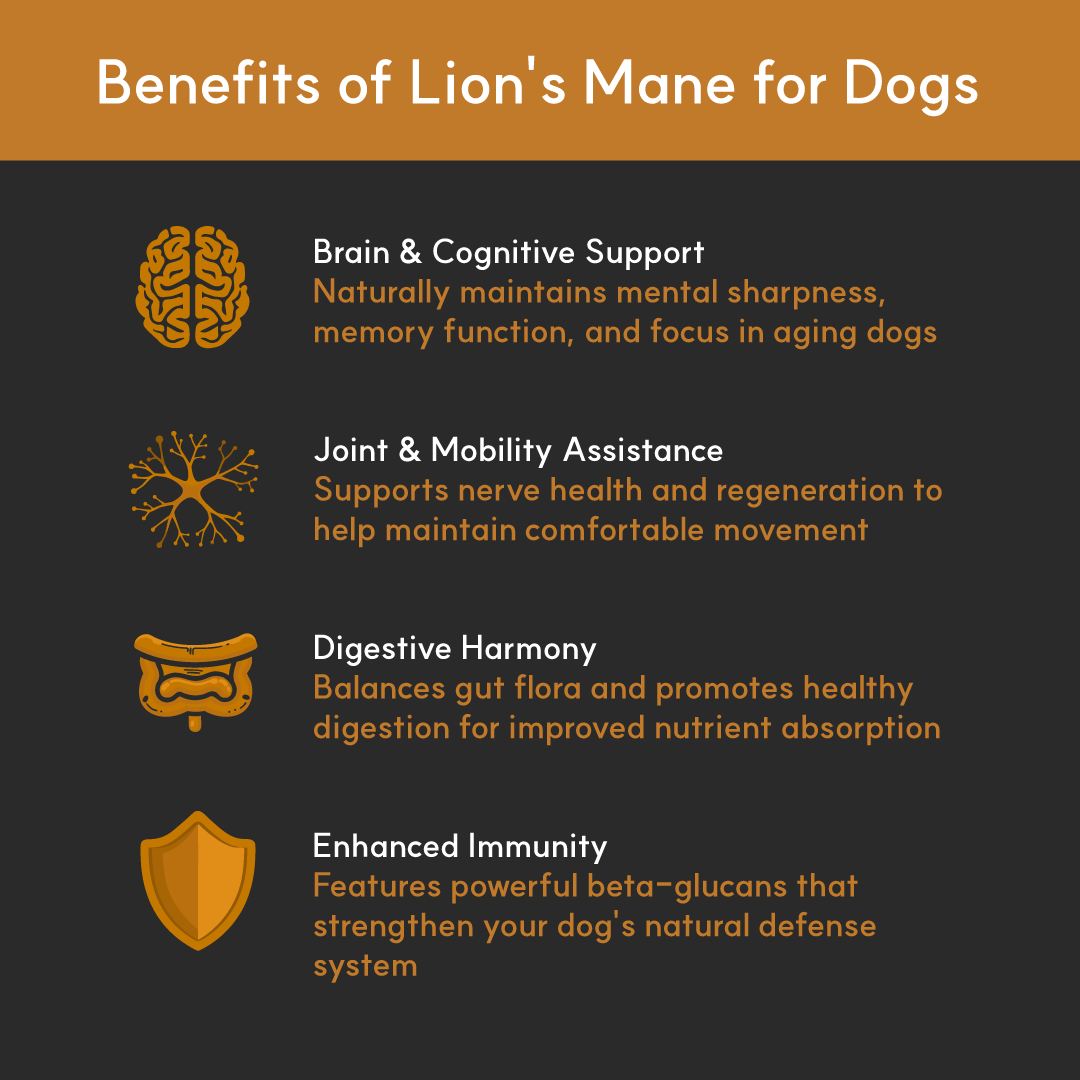
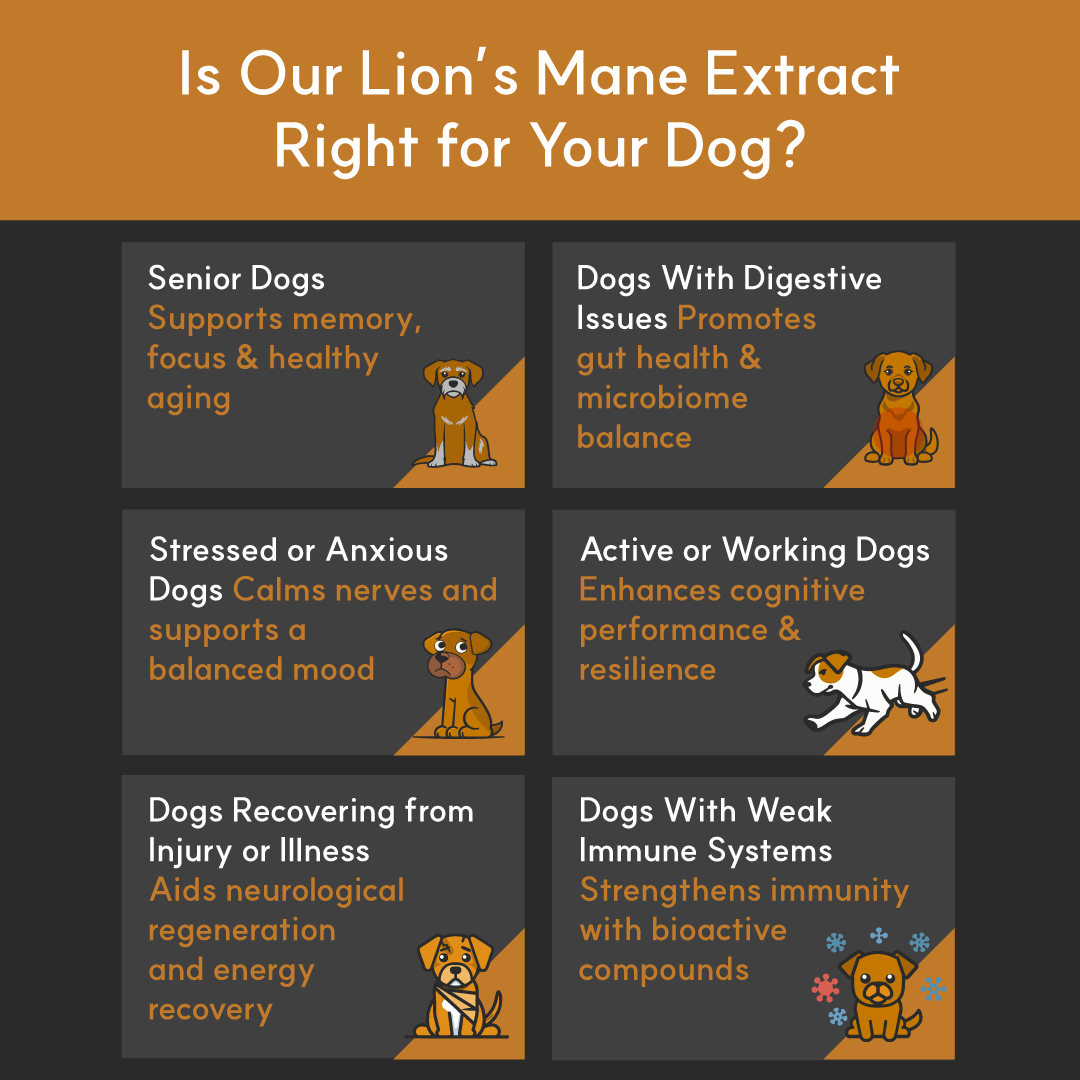
Lion’s Mane is often chosen for dogs that need support with focus, learning, or general cognitive wellbeing. It’s commonly used for senior dogs, but can also suit adult dogs during training or mentally demanding periods.
Will Lion’s Mane make my dog calmer or sleepy?
Lion’s Mane does not act as a sedative. It supports normal brain and nerve function, which may help dogs feel more balanced and focused without causing drowsiness.
Is Lion’s Mane only for older dogs?
No. While it’s popular for aging dogs, Lion’s Mane can also be used by adult dogs to support learning, focus, and cognitive resilience over time.
How long does it take to notice changes with Lion’s Mane?
Lion’s Mane is designed for gradual support. Cognitive and nervous system support typically builds with consistent daily use rather than producing immediate changes.
Can Lion’s Mane be used alongside other Borvo supplements?
Yes. Lion’s Mane can be used alongside other Borvo products, including seaweed, joint, and digestive supplements. As with any new supplement, we recommend introducing it gradually and monitoring your dog’s response, particularly if they are sensitive to dietary changes.
Can dogs have lion's mane mushrooms?
Yes. Cooked lion's mane or a lion's mane powder made for dogs is fine. Wild mushrooms aren't, because they're hard to tell apart and some are deadly to dogs. If your dog eats one on a walk, ring your vet.
Is lion's mane safe for dogs?
Yes, for most dogs. In a 16-week study, 11-year-old dogs ate it every day and the researchers concluded it was safe to use in pet food. Check with your vet first if your dog is pregnant, on medication or has a long-term illness.
What are the side effects of lion's mane for dogs?
The usual one is a softer stool in the first week. Starting with a pinch and building up over several days avoids most of it. Stop and ring your vet if your dog vomits, has diarrhoea for more than a day or two, or seems itchy.
How much lion's mane should I give my dog?
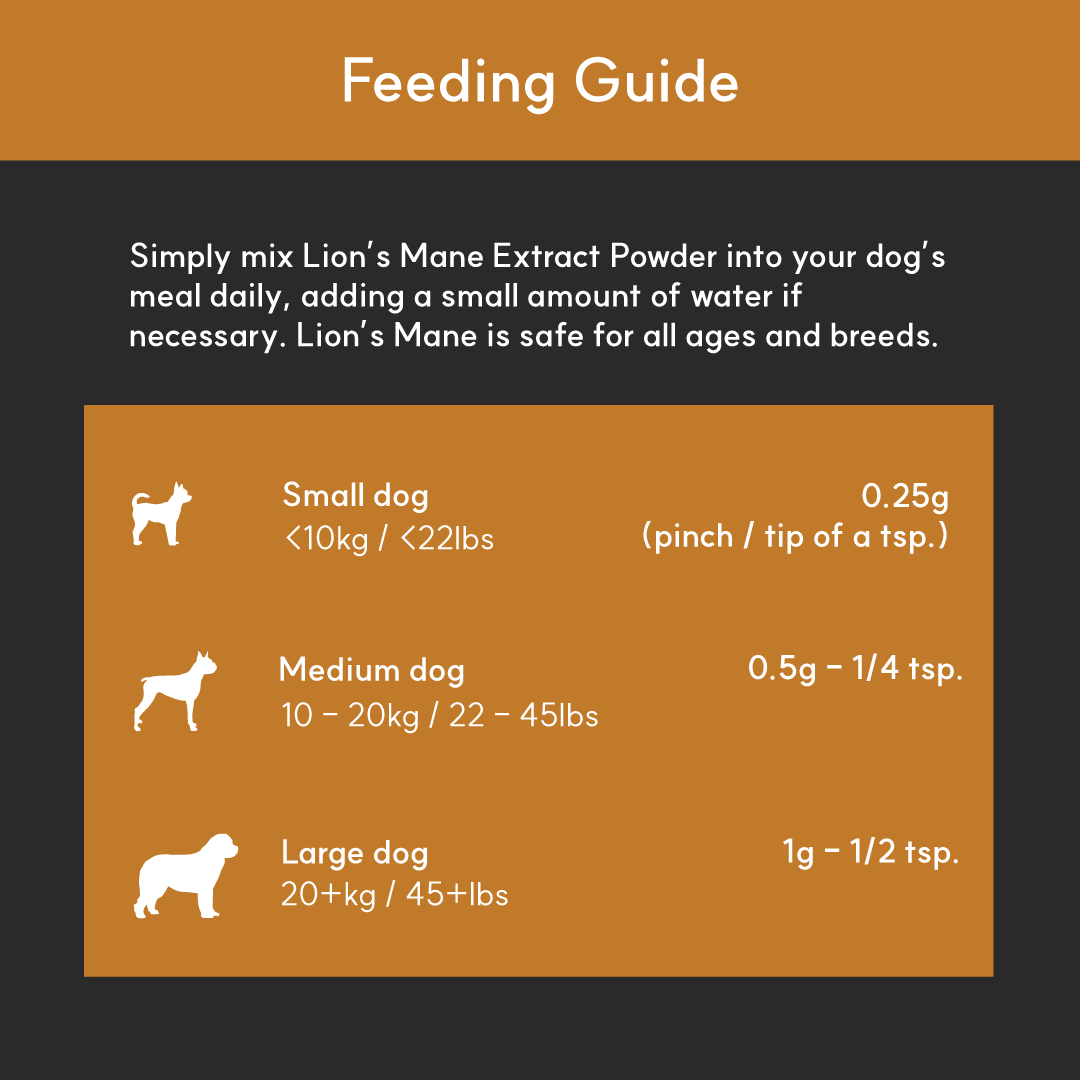
Once a day on food, 0.25 g (the tip of a teaspoon) for dogs under 10 kg, 0.5 g (a quarter teaspoon) for dogs of 10 to 20 kg and 1 g (half a teaspoon) for dogs over 20 kg. Start with a pinch and build up over several days.